
Email and Mobile Attention: Two Headlines Beside a Project
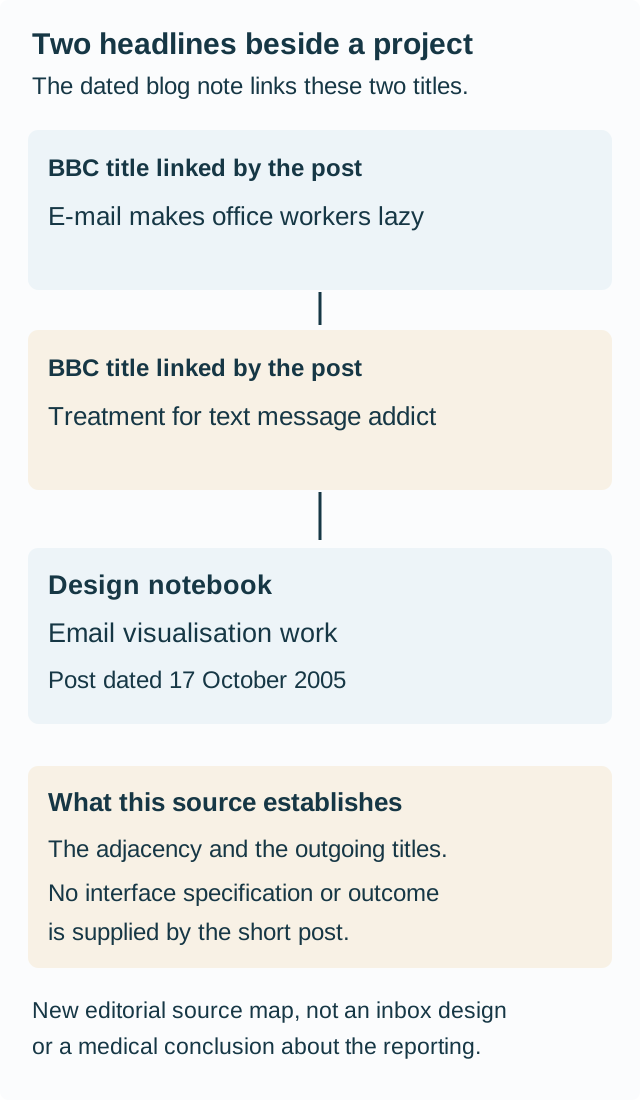
Two headlines sit beside an email-visualisation project. The adjacency is the interesting object here: a designer is collecting signs of communication becoming difficult to manage.
The post, 17 October 2005
In the saved post, Anjali Arora connects work on email visualisation with the BBC stories “E-mail makes office workers lazy” and “Treatment for text message addict”. The post establishes which stories she linked. It supplies no specification or outcome for the visualisation.
A concern, rather than a product brief
“Email” and “mobile phones” can describe technologies, habits or anxieties. Bringing those reports into a design notebook makes the boundary porous. Is the desired picture supposed to reveal a workload, change a habit or represent a social worry? The surviving note does not choose an answer. That open question is more revealing than a new inbox diagram attributed to the old project.
My reading is that the two links widen the subject beyond message volume. A count can describe what arrived. It cannot, on its own, explain a habit or identify an obligation. This is a distinction in the present reading, not evidence of a feature the original visualisation possessed.
Keep the missing evidence small and exact
The original BBC destination pages were not retrieved for this edition’s source review. Their titles are confirmed by the archived post; the underlying reporting is not independently assessed here. Neither the source trail nor this reading supports a medical conclusion.
For a fuller contemporary project brief, ArchChive’s recorded response names specific information needs. Here, the record remains a short note with two outgoing links. It need not borrow a finished example to earn its place.